6.2.15

Small Camera with Malaysia Top Model

Few days after I got my hands on Fujifilm X-T1, I received a fashion editorial assignment, to shoot Amber Chia for a magazine cover story. A fashion icon, Malaysia top model, the first Asian model being featured in GUESS advertisement. You just don't want to screw up this assignment.

During that time, my Fujifilm gears were limited. Only X-Pro1, X-T1 and XF 18-55mm f2.8-4 kit lens and I still haven't tested my X-T1 for assignment such as this, especially when the model is Amber Chia. The order I made on XF 56mm f1.2 was still on it's way and I won't be able to get it on time for my assignment day. So the most logical way was to use my trusted Canon system for it (you would agree too, right?).


On the shooting day, Amber arrived right on schedule. Yep, not late. Not even a single bit. She is one of the friendliest celebrities cum models and talking to her was a breeze. She practically greeted everybody in the studio with a very friendly smile on her face, making everybody comfortable working with her.

During her makeup and interview session, I was busy setting up my lighting and camera equipment. Artistic director's concept was very simple: everything white with some colourful decoration on her hair and body. White hair, white outfit, with white background. It was very challenging for my lighting setup I must say.


After I have done with my lighting setup, I stared at my cameras. The big Canon and the small Fujifilm. So I paused and thought: hmm, why not use my X-T1 with 18-55mm for this shooting? Well you may say this is too risky because it is almost a suicidal move to my career such as "what if something go wrong", or "what if the images you take turn out to be useless". I took that leap (if that is what it is to you) because I know I can succeed. A real breakthrough comes with risks. So without second thought, I took out the flash trigger from 5D3 and put it into X-T1's hotshoe.


The moment Amber stepped into the backdrop, everything just came naturally. Being a top model with international standard, I can only say her performance was perfect. I didn't have to give much instruction and she always, always give her best angle to me. The synchronization of her posing with my lighting timing was just right, JUST RIGHT, as if she was dancing with the light.

Honestly I did have some uncertainties prior to the shooting (about the camera) but they were all gone soon after a few shots. The focusing speed was fast enough to keep up with Amber's pose changing frequency. X-T1 didn't disappoint me throughout the whole shooting process (woohoo!).


Many people thought the colourful splashes were photoshopped when they saw the outcome being published in the magazine. Even my fellow photographer friends also thought they were post editing.


I can firmly tell you: they were all handmade, by the very talented artistic director, Berg Lee. I have been working with Berg for endless times and I must say he is one of the most gifted artists I have ever worked with. His skillful touch, accuracy in achieving what mind intends to present, and to act and react when stumble on unforeseen on site hiccups. So why bother doing photoshop when you have someone who is capable of get it done right at the beginning?  :)


The shooting was great. We had a great wrap up with my little Fujifilm X-T1 (yay!).

Thank you Amber for the very pleasant experience. :D

Thank you Fujifilm for the assurance in my skill.

Thank you Canon for taken me in and now ready to let me fly further.

3.2.15

My journey of "downgrading" from full frame to APS-C (Part 3)

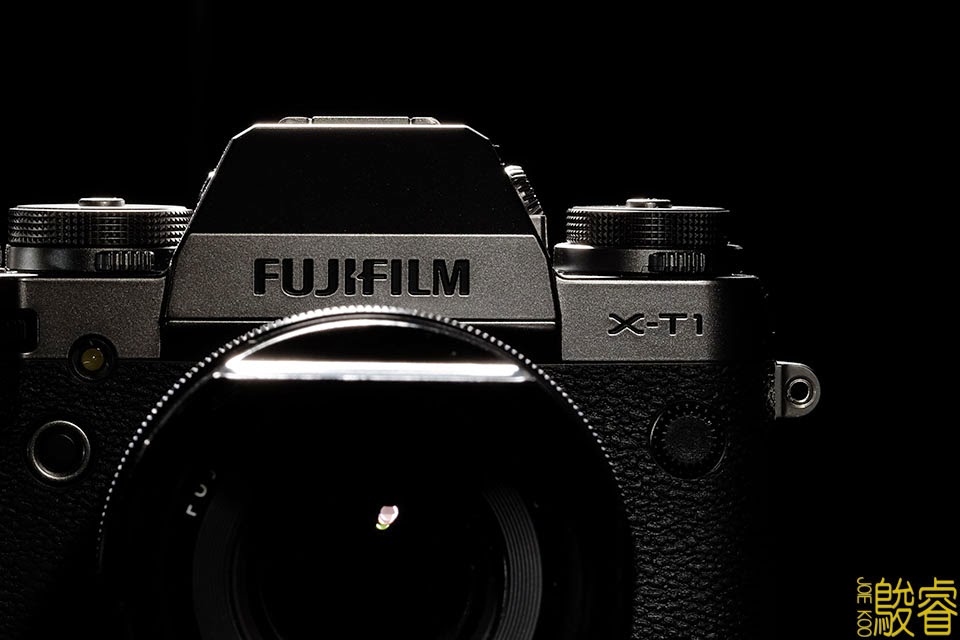
How should I describe X-T1? It is basically everything I wished for a camera that suits my line of job and requirements. It has image quality of the X-Pro1 but much much better focusing performance as well as the weight and feel in my hand are just right. And the EVF? I never thought EVF can be as good as this! It is huge with fast refresh rate, it has 100% viewing coverage and the ability of rotating the image to portrait orientation view when you rotate the camera 90 degrees. Another feature that I really like about this camera is the real time exposure preview through the EVF. You have the freedom of using it or you can always switch it off if you like to simulate the use of OVF. What I always do is I will mostly switch it on for assignments like wedding, event and stage shooting, and switch it off for studio works. Anyway, it does produce quite a bit of noise though when lighting condition is poor.


Since then, X-T1 has become my main camera for most of my works and I finally gave up most of the EF lenses and 5D Mark2 after a month or so. Not only that, I too at the same time added another new member to my X system, the XF 10-24mm f4 (15-36mm full frame equivalent) super wide angle. It is a very good substitute to the EF 17-40mm f4L that I owned. In terms of sharpness and distortion, Fujiflm totally outperformed Canon with this lens. The only Canon equipment that I have left with me at that moment were the 5D Mark3 and EF 70-200mm f2.8L II. For events and most importantly performing arts shooting, I still needed this focal length that Fujifilm has yet to release a similar one.


Camera manufacturers love to go into megapixel war. In fact, a lot of photographers love to argue over megapixel when it comes to camera comparison. From Canon's 20MP and above to Nikon's 36MP, endless debates and argues happen all over the internet, same as full frame vs APS-C. I don't deny that more megapixel will have more advantages if you are a photographer who crop your works a lot or if you are one who produces large prints for close viewing distance. But seriously do you think it will affect your image quality if your prints are not-that-big or just-computer-screen-viewing?

Recently I had my second solo photography exhibition at The Camera Museum. There were nineteen photographs exhibited, eighteen of them with the size of 24" x 36" and one with the size of 30" x 84". Three out of eighteen were shot by X-T1 and the rest were done using 5D Mark3.


I gave my friends and fellow photographers a small challenge during that exhibition: please find out which three were shot using X-T1. Not to my surprise, nobody succeeded. It was a 22MP full frame vs 16MP APS-C printout, with the printing size of 2 feet times 3 feet on photographic paper my dear friends. :)


Feel free to keep on debating or arguing over the internet, or zoom to 200% on the computer screen for pixel peeping. I prefer to printout my photographs and hang them on the wall. :) Am I being snobbish? Maybe a little bit But I am really sick of hearing all the arguments over paper specs or MTF charts. Photography is my passion, not photography equipment.

By the time I am writing this, news of "Canon 5Ds with massive 50MP will be released soon" is all over the internet. There goes the megapixel war again. Sooner or later, I can foresee comparison between 5Ds full frame and Pentax D645z medium format will hit the internet - a new warfare will be in it's way, full frame vs medium format.

Now back to the topic. Months I have waited for my EF 70-200mm f2.8L II replacement. When Fujifilm's XF 50-140mm f2.8 (75-210mm full frame equivalent) launched, I knew that this is the one. I need the extra reach to the stage when I shoot concert or performing arts with the flexibility of the zoom range. So I traded in my 5D Mark3 and 70-200mm f2.8L II for XF 50-140mm f2.8 and another X-T1, graphite silver edition when the lens is in stock.


I am talking about nearly half of the weight of 5D3 with 70-200 f2.8L II, with equally great image quality and focusing performance. Of course I am truly satisfy! I thought my previous EF 70-200 f2.8L II was sharp enough at wide open but I got blown away when I see the sharpness of my new XF 50-140 f2.8 at wide open.

One thing that I must say is the latest firmware of X-T1. The total silent electronic shutter, 1/32000th sec shutter speed and most importantly, interlocking of metering and focus areas. Canon never put this feature into the 5D series. Only it's 1D series will have such ability. What a god send by Fujifilm! I will talk more about these in my future blog post about performing arts photography.


Anyway there is one weakness that I need to mention about Fujifilm or any other mirrorless systems: the battery life. Although I managed to max out the battery life with about 500 shots with my X-T1 when the battery's spec sheet said it can lasts for 350 shots per full charge but with Canon I was able to easily hit more than 1000 shots per battery. Well one thing good about this: it tells me to take my shots carefully, quality over quantity though. And although I never max out the Canon battery power during a full day shoot with 2 batteries per camera, but I bet no one will disagree that more juice will come in handy sometimes.


Another thing that I notice is there is always a short delay which will halt the camera for a while when the camera try to switch power from the depleted battery to the second battery (using battery grip). It always happen when your are switching on or waking up the camera in sleep mode (with a depleted battery in the battery grip). The halt might cause me some critical moments during photo shoot and it does somehow annoy me.


By all means, I don't switch system for the sake of loving Fujifilm or hating Canon. It's just that currently I found the system that suits me more, with the right weight and feel. But of course image quality and performance are my concern too. A system that is much lighter and cheaper, with comparable image quality and performance, I don't see any reasons not to switch.


Who knows maybe in the future, Canon might come up with something that make me switch again? But one thing I can assure you is that it won't be the 50MP 5Ds.  :)

My fellow photographer friends asked me whether Fujifilm pays me in writing these 3 parts blog? My dearest wife is a creative writer and she always tells me writing can be a meditation journey. It helps you to organise your thoughts and arrange them into proper order. With that achieved you will have a clearer picture of what you have done, what your are doing right now and what will you do in the future. It does make sense to me. So if you really want me to answer the question then the answer is NO. I don't get anything from Fujifilm by sharing all these experiences and thoughts of mine.

I will continue writing blogs about my photography journey, be it in fashion editorial, performing arts photography, sometimes wedding photography, or maybe the equipment that I use. It won't be technical reviews about photography equipment as those are widely done by many other photographers. As I said before, I am not a technical kind of person and I hope you all enjoy reading my blogs. :)


Further reading:

My journey of "downgrading" from full frame to APS-C (Part 1)

My journey of "downgrading" from full frame to APS-C (Part 2)

31.1.15

My journey of "downgrading" from full frame to APS-C (Part 2)

X-Pro1 was my walk-around-camera for self leisure and behind-the-scene-camera during fashion editorial shoot (replacing the 7D) for the first two months after I bought it.


I also borrowed my brother's 35mm f1.4 (50mm full frame equivalent) and 14mm f2.8 (21mm full frame equivalent) few times to play around.


I really love the straight out of camera jpeg's skin tone and the accurate white balance. And the most beautiful thing about it was when I use the 35mm wide open at f1.4, the sharpness was amazing compared to my Canon system! Another thing I love about my X-Pro1 was the spread of its focus points in the viewfinder, not cramping in the center like DSLR does.


Then, I started to use it as my second camera, replacing my 5D Mark2 for wedding assignments. The firmware upgrade did improve a lot for the focusing speed but one thing for sure is that X-Pro1 is not built for fast pace shooting. The focus locking on target was not as good as my Canon, not even close. However, if it's lock on, you will be damn sure the target is in focus.


Being used to 5D Mark3's 100% viewfinder coverage, It took me a while to get used to the X-Pro1's OVF for composition. I never bother using the EVF for moving targets anyway. The frame rate was just too slow and I missed a lot of moments. The only time that I might use EVF is probably when I shoot still targets, easier to get correct composition. Low light performance? It hunts a lot with 35mm, slightly better when using the newer 18-55mm.


Despite having all these "inconveniences" by using X-Pro1, I never had the thought of get rid of it. The usage of X-Pro1 became more and more frequent in my workflow. I just love the image quality of it! Not to mention it's weight and feel in my hand. Somehow without my early realization, I became a slower shooter. I can hear my own breathing when I look into the viewfinder of X-Pro1. I can feel the moments and press the shutter when it is time.


The straight out of camera jpeg's dynamic range is also very nice. Details of the highlight and shadow are nicely rendered even in high ISO.


However, for critical moments such as wedding or any other events, I still relied on my Canon. Not to mention fast pace fashion shoot when the model keep on changing pose, X-Pro1's capability ends here I'm afraid.

People love to discuss about full frame vs APS-C high ISO performance. Indeed there is a huge gap between my 5D Mark3 and 7D in terms of noise level and details. Unless you zoom everything to 100% in the screen for pixels peeping, there were not much of a difference between Fujifilm APS-C and Canon full frame though my ISO usage were limited to 6400 only. Besides, I never make large print with high ISO images.

The biggest print I did was like 8"x10" at ISO1600 in photo album. The advantage of full frame sensor with cleaner and more details in high ISO no longer apply to me. I am pretty sure along the way when sensor technologies evolve, whether it's a APS-C, micro four third or any other smaller sensors, the performance will be beyond your imagination. But what about megapixel? This is also another topic that creates a lot of discussions. I will talk about it later. :)

Although X-Pro1 has the image quality and weight that I wanted, I was still waiting for Fujifilm to release the camera that will actually "Wow" me. At that time, X-E2 was already in the market but with only EVF that perform slightly better than X-Pro1, thus I don't see the need of it. Then came the launch of X-T1.

I have always fascinate Canon F1 from the old days but I never owned it. The fascination was triggered by a Japanese movie, "Love Collage" starring Ryoko Hirosue. X-T1's SLR form factor actually looks similar to Canon F1. That was the first thought when I first saw X-T1. So you can imagine I was a bit disappointed when i learned that X-T1 only comes with EVF but disappointment became excitement after I gone through extensive read up of X-T1 reviews.

The decision was finally made: a X-T1 together with XF 56mm f1.2 (85mm full frame equivalent) shall join me in my photography journey!


One of the biggest reasons that I decided to acquire X-T1 was the future lens road map promised by Fujifilm. Most focal lengths that I used, be it prime or zoom, are in the list and I am pretty sure the quality will be guaranteed.

Do stay tune for part 3, which will be the last part. :)

Further reading:
My journey of "downgrading" from full frame to APS-C (Part 1)

My journey of "downgrading" from full frame to APS-C (Part 3)

30.1.15

My journey of "downgrading" from full frame to APS-C (Part 1)

Being a professional photographer for 6 years, I was very loyal to Canon system. 

I came from film era, started as a hobbyist from EOS 50 to EOS 3, not to mention the Canonet QL-17 G3 rangefinder which I got it from my dad, and stepped into the digital age with a EOS 20D.


During when I decided to go full time as a photographer, 5D Mark2 was the first full frame camera that I got. I was always fascinated by the image quality of a full frame system - the colour, the contrast, the high ISO performance etc., practically everything of it! 

Since then, I have owned many of Canon equipment, from camera bodies including 7D, 1D Mark3, 5D Mark3, zoom lenses such as 24-70 f2.8L, 70-200 f2.8L, 17-40 f4L, 24-105 f4L to prime lenses like 35 f1.4L, 50 f1.4, 135 f2L and 100 2.8L.

Trust me when I say I was convinced that I am going to be a Canon hard core supporter for as long as I am taking photographs!


I started my photography career as a wedding photographer. Of course that was not what I wanted to be. 

My passion is always in other genre such as performing arts photography, stepping into the world of fashion photography and doing my own photography projects, particularly conceptual portraiture. 

There was no doubt Canon had helped me in getting the images I wanted and achieved my goals and dreams.


I always use prime lenses for wedding assignments because of their super wide aperture. They are very useful in low light condition and very handy in helping me to create the creamy background that I love. 

But one thing bothered me. 

These prime lenses, when in wide open, couldn't seem to achieve the sharpness that I required. I always need to step down the aperture to get the desirable sharpness. So I asked myself, why do I pay such a fortune for these high end gears if I can't use them to its fullest? For example, when using 35 f1.4L, I needed to step down to f2.0 to get acceptable sharpness, not to mention 50 and 85 f1.2L that totally failed me. 

After all tryouts I finally came to a conclusion: they can never perform to the extent of what they portray. That makes me feel that they exist merely to fulfill the ego of owning a big aperture, heavy and pricey lens.


There is no doubt Canon did a great job in its focusing system. It is very fast. But not always accurate, unfortunately. 

5D Mark2's focusing system was crappy. Luckily 5D Mark3 made a huge leap on this from 9 focus points to 61 focus points, which helped to increase the accuracy by narrowing down the gaps. 

Canon's high end bodies even have this autofocus micro adjustment feature. You can fine tune each and every lens that you use to achieving maximum autofocus accuracy by millimeter. Sounds cool right? But not to me. My passion is to create images that I love, and earn my living with it. So spending my time on micro adjusting the autofocus accuracy is definitely not for me. Why on earth would I spend my precious time on adjusting the accuracy by millimeter if I have already paid so much for the lenses? They are supposed to perform right like they should instead of asking me to do their job.


I know many tech-junkie photographers love to play with that. Achieving tag-sharp focus after the micro adjustment will make them very happy. But what makes me happy is to create images with almost zero hassle with the equipment I use. As I said, I paid professional price tag for professional equipment that I use to create my desired professional images instead of using the so called professional features on the equipment, if you know what I mean. 

I am just not that technical kind of guy. 

The 24-70 f2.8L was a pain in the a$$. I'm not saying that it's a bad lens. I needed to check the focus from time to time to make sure I, or the lens, nail the focus. I needed to micro adjust the focus from time to time as well for better focus performance. Who knows maybe I got a bad copy. It was my primary lens for fashion assignments but I had to let it go, replaced it's role with 24-105 f4L as I don't really need f2.8 . I did consider the mark2 version though but it finally did not happen. :)


But you know what really bothered me most? The weight of the equipment. 

Well this could probably due to my aging muscle but hell carrying two bodies with 24-70mm and 70-200mm or even 35mm and 135mm the whole day was no joke. Studio work is not much of a problem as I can occasionally put down the camera but assignments like wedding and corporate event will not give you such privilege. The equipment were practically hanged on me all the time in a much bigger working perimeter. Seriously I didn't enjoy running here and there carrying two cameras. Again, I guess I must be getting old. 

I always bring my cameras with me on my vacations. To tell you the truth, after a few trips there were more time the cameras resting in the bag than going out on my shoulder. Occasionally, I will grab my camera for street shooting. But I got lazy over time and my street shooting became lesser and lesser. Not so fun anymore by carrying a bulky camera around outside my working schedule. 

That was the time the urge of getting a smaller camera kick in. Being “used to” a full frame, I can never compromise to the image quality of any ordinary compact cameras. However, I was not very sure what was I looking for. I have tried Canon’s Powershot G series but the look of it just didn't feel right to me. Creative field people always go with feeling right? :P


Micro four third system did catch my attention for a while but I am not a fan of Olympus's colour rendition, be it a PEN or the retro style OMD. Then came the launch of Fujifilm X-Pro1. 

Honestly Fujifilm's DSLR never caught my eyes as it is not full frame. I did hear a lot about the nice skin tone of Fujifilm but I never really laid my eyes on the actual output because it was not “full frame”. Haha! To me, DSLR was just Canon and Nikon and I really dislike Nikon's skin tone and white balance. These were the two major factors that I chose Canon over Nikon.


With the launch of X-Pro1 together with the three prime lenses, I started to lay my eyes on Fujifilm system. It reminds me of my dad's Canonet QL-17 rangefinder. It might be a nostalgic feeling as I do like the look of X-Pro1. But I never really “want” it as it is not Canon. Ya...I was a Canon fanboy I guess. Somehow I was hoping for Canon to come up with a new line of camera system just like Fujifilm’s X Series. For a period of time I tend to forget about X-Pro1, until I attended a photography festival...or maybe a camera fair? I can’t really remember.


There was a booth of Fujifilm, featuring all it's camera from compact to DSLR, and the spotlight was on it's X Series, the X100, X-E1 and of course X-Pro1. That was the first time I touched a X-Pro1. It felt good in my hand with the 35mm f1.4, together with the square type lens hood. One word to describe the whole setup - sexy! The feeling in my hand was just right! 

"Is this the camera that I am looking for?" I asked myself. 

By judging at the look and the feel of it in my hand, the answer was definitely yes! With the aperture ring on the lens and the shutter speed dial on the top plane, I suddenly had the true feeling as a photographer. I never had that kind of feeling using a DSLR. Then I tested it. The optical hybrid viewfinder and the electronic viewfinder was new to me. I can easily get use to the optical viewfinder, seeing the lens in the viewfinder was nothing new to me as I have used a Canon rangefinder before. But for the electronic viewfinder, I would say I rather not use it. If I would to describe it, it was like watching a delayed playback of the scene. After a few test shots, the focusing speed and the sound of the focusing motor did annoy me. I asked the sales person for the price tag and decided it is definitely not for me after I got the figure. And so I went on my photographing journey, sticking to my one and only Canon.


However, the feeling of the die-cast aluminium alloy body in my hand somehow “haunted” me for quite some time. I did some online research about it. "Good looking camera, great image quality but bad focusing" pretty much summed up X-Pro1. The focusing system was a major drawback to me, not to mention its high price tag. With that amount of money, I can easily acquire decent equipment to further enhance my Canon system.

My hope to Canon in releasing a similar system ended with the launched of EOS-M, a large APS-C sensor modern looking compact camera, promising great image quality in a compact body. What turned me down with this EOS-M system was the absence of a viewfinder on it. Everything was about the LCD screen...duh?! Another selling point of the EOS-M was the ability of making use of your EF lenses with an extra adapter. Seriously? Mounting those huge lenses on a compact body? It looks hideous and ridiculous to me. I definitely won’t put my EF lenses on a compact body for the sake of "make use of it" for my leisure photography, period! 

Reviews said that the focusing was terrible if using EOS M body with EF lenses. But I never bother to test it out. It does have a few EF-M lenses but again, the feeling was totally wrong. No viewfinder! Not retro style body! Seems like Canon F1 style digital body will not happen anytime soon...


So what actually happened that “recalibrate” my photography camera system? 

I have to start the story with my younger brother. 

My brother is a photography hobbyist, like it or not I was the influence. :) He owned 5D Mark2 with a few L and Carl Zeiss lenses. Yes, you heard me, owned with the past tense. One day with surprise, he told me he ditched his Canon system and acquired the Fujifilm system with X-Pro1 and few XF lenses. I was like huh? You know X-Pro1’s focusing problem right? His answer actually shocked me: Fujifilm upgraded the firmware of X-Pro1 with much better focusing performance, and he got his stuffs at a very attractive promotional price! I quickly grabbed his X-Pro1 and did a few test shots and almost immediately I can feel the difference with my previous encounter with X-Pro1. Not as good as Canon but it was acceptable to me. The move of Fujifilm putting effort into upgrading the camera firmware really amazed me. I did get firmware updates for my Canon system but those were just minor stuffs like correcting a spelling error in the camera menu or fixing various so called “phenomenon”. That was the time I’m in serious consideration of the Fujifilm X Series. But wait...I thought I was the influence?? O.o


Before I actually make a decision, I always like to do some digging online. Seemed like Fujifilm is continuing to gain positive feedback by upgrading it’s X Series cameras’ firmware. After gaining sufficient assurance, I got my first X Series camera, the X-Pro1 with XF 18-55mm f2.8-4 zoom kit. Yup, not the XF prime lenses as this kit lens got a very good review by many photographers. Besides, I have my younger brother’s prime lenses to play with. :P

Well, this was how I began my "downgrade" journey from a full frame to APS-C.

Further reading:

My journey of "downgrading" from full frame to APS-C (Part 2)

My journey of "downgrading" from full frame to APS-C (Part 3)

25.1.15

This is my boy


18.11.14

Is It Halloween?


18.10.14

Light & Shadow